What is Dispatch?
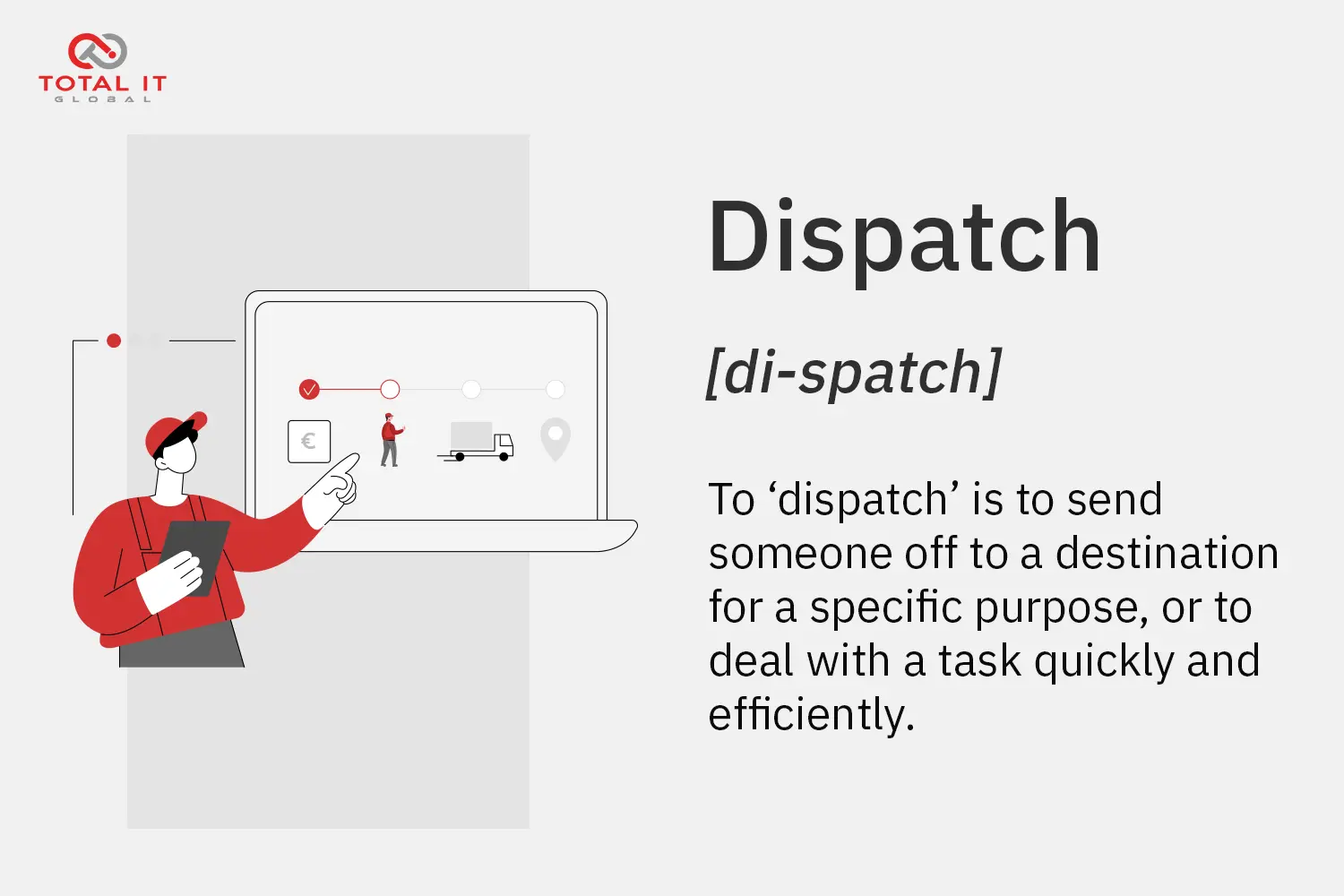
By definition, to ‘dispatch’ is to send someone off to a destination for a specific purpose, or to deal with a task quickly and efficiently.
In the infrastructure space, this represents the vital transition from identifying a request at the Service Desk to putting a qualified engineer directly in front of the hardware. While the immediate focus is on incident resolution to fix an active failure, dispatching is equally important to support a move or change, as well as conducting scheduled, routine visits for checks and maintenance.
We view dispatching as the critical heartbeat of field services—the bridge between a digital problem and a physical solution. Imagine a high-traffic retail branch where the Point of Sale (POS) hardware fails on a Saturday afternoon. While a remote helpdesk can identify the error, they cannot physically replace a faulty motherboard.
This is where a dispatcher identifies the urgency, aligns an engineer with the correct technical competency—who is tasked with installing, maintaining, troubleshooting, and repairing equipment—and provides the replacement hardware (if required) to move the business forward.
When executed with this level of precision, dispatching validates that services align with your specific operational requirements. This coordination serves as a primary driver for cost optimisation, increased workforce productivity, and elevated employee satisfaction.
How dispatch works in field services
Dispatching functions as a primary component of Field Service Management (FSM)—the discipline of coordinating and overseeing technical resources and activities that occur beyond a company’s primary facilities.
This operation relies on the coordination between two primary roles: the Dispatcher and the Technician. To drive a successful outcome, the process follows a precise flow:
- Incident Capture:
The Dispatcher (our Service Desk professional) collects the ticket, identifies specific technical requirements, and verifies the site location to prevent delays in arrival. Here’s a mini checklist in a ticket:- Site Contact (Local POC): Name, direct phone number, and email of the person on-site.
- Asset Details: Serial numbers and photos of the faulty hardware.
- Access Windows: Specific days and hours the facility is open, including any security clearance protocols.
- Required SLA: The precise time constraint (e.g., 4-hour on-site response).
- Initial Diagnostics: Clear notes on what troubleshooting steps have already been attempted remotely.
- Resource Alignment:
We align the engineer with the specific skillset required for the task. This makes certain the right expert arrives on-site, whether the requirement involves a server rack installation or a desktop hardware repair.- Xperian Smart Lockers (Parts Provisioning):
Securing the right talent is only half the battle; they also need the right components. We bridge this gap through our Xperian Smart Lockers. By staging spares and replacement parts in secure, strategically located smart lockers, our aligned engineers can retrieve required inventory en route to the site, cutting out warehouse delays.
- Xperian Smart Lockers (Parts Provisioning):
- The Dispatch:
Once we align the technician and secure the necessary components, we officially dispatch them to the site—whether that is a corporate headquarters, a remote data centre, or a retail branch. This stage focuses on speed and logistical accuracy to meet the client’s specific SLAs. - Multi-Platform Integration (ServiceNow & ITSM):
We integrate directly into our clients’ or System Integrators’ (SIs) preferred ITSM platforms like ServiceNow. This cross-tool integration allows tickets and SLA updates to sync automatically between systems, removing the need for manual data entry. - On-Site Execution, Validation & Mobile Tracking:
The technician contacts the local site lead before arrival to confirm the visit. Once on-site, they execute the task—troubleshooting, repairing, or installing as required. They utilise a mobile FSM application to provide the delivery team with real-time updates on progress. Before leaving, the engineer takes on-site confirmation of the fix, uses the FSM app to upload on-site validation photos and reports back to central command.
The technician contacts the local site lead before arrival to confirm the visit. Once on-site, they utilise a mobile FSM application to track location and progress in real time, allowing central command to provide precise site arrival windows. The engineer executes the task—troubleshooting, repairing, or installing as required—and uses the field portal to upload on-site validation photos and customer sign-offs before reporting back to central command.
Benefits of Dispatch in Field Services
Efficient dispatching is a prerequisite for success in field services. When managed with precision, it moves beyond logistics to provide several strategic business advantages:
- Minimised Operational Downtime:
Prompt dispatch prevents hardware failures from disrupting business continuity. By reducing the window between incident capture and on-site resolution, we protect your end-user productivity and mitigate the risks associated with extended system outages. - Cost Optimisation:
Efficient dispatching acts as a primary guard against operational waste. By treating every ticket as a logistical calculation, we protect your maintenance budget through:- Proximity-Based Routing:
We reduce overheads by aligning the correct technician with the nearest geographical location. This approach slashes unnecessary travel expenses and mileage surcharges, which can otherwise inflate the cost of a single ticket by 30% or more. - Elimination of the “Double-Visit”:
A common industry failure is sending under-qualified staff who cannot resolve the issue on the first attempt. Our dispatching process identifies the exact technical competency required before the engineer leaves. By achieving a high “First-Time Fix” rate, we minimise the cost of repeat visits and secondary call-out fees. - Resource Right-Sizing:
Not every task requires a senior systems architect. We map the complexity of the hardware issue to the appropriate level of expertise. This prevents you from overpaying for overqualified labour on simple component swaps while making certain that complex failures receive the specialist attention they require. - Local Delivery, Global Coverage:
Managing a wide-spread IT estate may lead to “expedition costs” where engineers have to travel long distances. Our model utilises a vast network of local, vetted professionals or partners, reducing the need for international travel routes and expensive per-diem costs.
- Proximity-Based Routing:
- Complete Visibility & Accountability:
Every dispatch remains under constant monitoring. This creates a transparent monitoring and audit trail where clients know exactly who is attending the site, their estimated arrival time, and the specific scope of work. This level of oversight removes the guesswork from field operations. - Elevated End-User Experience:
Technical issues are inherently stressful for your staff. When a professional arrives on-site shortly after a remote ticket escalation, it builds confidence in your IT infrastructure. Employees feel supported by a responsive system, which keeps focus on core business tasks. - Scalability across Borders:
Precision dispatching allows your business to grow without the burden of managing local engineer networks. We handle the complexities of different time zones, languages, and local regulations, providing a consistent service standard regardless of where your offices are located.
Conclusion
Managing a global IT estate is a high-stakes strategic exercise. Precision dispatching turns tickets into timely, verifiable resolutions. By aligning the right skillset, inventory, and proximity and backing the process with FSM tooling and clear post-resolution reporting, organisations reduce downtime, improve first-time-fix rates, and control costs across any geography. Dispatch is a strategic capability, not just logistics: when executed with precision, it protects business continuity, boosts workforce productivity, and scales your IT operations confidently aligned with your business needs.

We understand the gravity of every technical task that occurs on-site. We remove the burden of coordination from your internal teams, making certain that every field service request is dispatched with technical precision and resolved with speed. Whether the requirement involves a server repair in a remote data centre or a hardware deployment at a retail branch, we handle your IT infrastructure tasks with authority and operational efficiency.